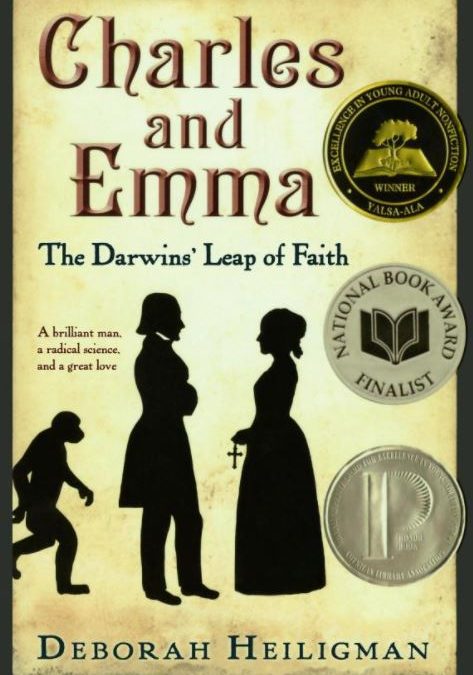
Charles and Emma was a book about Charles Darwin and his wife Emma, specifically about how her faith, and his lack of faith shaped their marriage. After Charles returned from his famous voyage on the Beagle, he had an important question to ponder- to marry or not to marry. At the age of 28, he was definitely of marrying age and, as his father reminded him, he wasn’t getting any younger.
Charles, taking the scientific approach, observed his married friends and then proceeded to make a pro/con list of the advantages and disadvantages of getting married. Getting married would make it harder to travel, it would mean less time, and less money, to devote to his pursuit of science. Lastly but certainly not least there was also the matter that after his voyage around the world, Charles had come to doubt that God had created each individual species. Rather Charels was working on a theory that, counter to the mainstream thoughts of the day, would prove that God had made a creature and then the creature would evolve based off of its need to survive and adapt accordingly.
Taking God out of the creation story was not a popular view. To make things worse, when he really got honest with himself, Charles didn’t believe that God interfered with anything on earth after He started the world. Charles wasn’t even sure he believed if there was a God- how could a good God let all of the horrible things that happen in this world occur?
After much pondering Charles went to talk with his father, a man who didn’t really believe in God, and wouldn’t be shocked by Charles’ thoughts and beliefs. Charles talked over with his father how his counter culture beliefs would affect his marriage. Should he just avoid the institution all together? His father put his worries to rest but he had one little piece of advice- don’t tell the lucky woman about his lack of belief.
Charles decided to move forward with plans to marry. And he found his girl! A smart woman, a cousin of his.(This was quite normal and often even preferred among the higher class during this time period.) He asked the question and she said yes. There was just one problem- Emma was a devout believer. They both entered the institution of marriage knowing that they could well differ for the rest of their lives on one core belief. The rest of the book talks about their married life, how Charles career progressed, and how they juggled life, split as they were, yet still very much in love.
I found this book fascinating. I didn’t know much at all about Charles Darwin and had always supposed him to be a strict atheist; in fact he was more of an agnostic than an atheist. Emma held fast to her Christian beliefs. This book did a good job of showing how in day to day life compromise can be found, happiness had, but ultimately tension does arise from different belief structures when trouble comes. I enjoyed learning more about Charles and Emma from a strictly academic point of view, but I also think this would be an excellent book to recommend to high school students and young, unmarried adults. No matter how much you love the person to which you plan to marry, be very cautious if they don’t hold the same core values as you. Regardless of what your beliefs are, if they are vastly different from the person you marry, it will create strife and tension within the marriage and this is why the Bible tells us in 2 Corinthians 6;14, “Do not be yoked together with unbelievers. For what do righteousness and wickedness have in common?” How united can we be in a marriage if we don’t share what is closest to our hearts?
Quick reminder that this post contains affiliate links; that means if you click on the link I will make a small commission at no extra cost to you- it’s a way to support my blog! I will only ever share an affiliate link if I love the product and think that you just might love it too!
I have always wanted a well done home. One that feels cozy and inviting, that is well kept and fun to live in! I want this not only so that people feel welcomed and comfortable in my home- I want them to come over and feel welcomed by the wreath on the door, to be able to settle in on the couch with the pillows, and to have a throw blanket handy if they start getting chilly. I want to be intentional in my decor to have a home that is not only styled to my tastes, but also one that is liveable. While there is still so much out there that I can learn, and so many ways that I can grow in my decorating skills, I do believe that I have come along way from where I started. One of the tools that have helped me along the way are decorating books- I love them! Below I have listed three of my favorite decorating books, each one focuses on different elements of creating a well planned home, that I feel have given me the most tangible tools for laying the groundwork to a well done home.
Quick reminder that this post contains affiliate links; that means if you click on the link I will make a small commission at no extra cost to you- it’s a way to support my blog! I will only ever share an affiliate link if I love the product and think that you just might love it too!
HomeBody by Joanna Gaines
If you are into decorating then you have undoubtedly heard of the Gaines family and Joann’s signature farmhouse style. However, even if you aren’t a farmhouse style fan I would still urge you to pick up this book! This is a great book for a foundational look at building your home decor. Johanna walks you through a variety of different homes room by room, highlighting the functionality of each one. What is the purpose of your entry way and what elements do you need to add for it to function effectively? Do you need a table with a tray for keys? A runner or welcome mat? What about a light as soon as you step inside the door? Joanna walks you through several different examples discusses each, and then includes a troubleshooting guide at the end of each section. At the end of the book she includes a design template so that you can sketch out your room, and make a plan for how you will tackle decorating it. While a lot of the houses featured in this book have a farmhouse or rustic feel I don’t think the tools thought in it are limited to a a specific style. Homebody is great guideline of what things to consider and other helpful information that will help simplify the process of decorating your home.
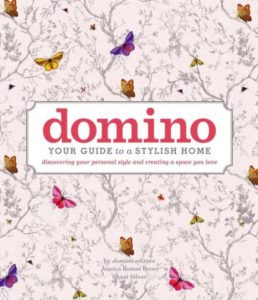
Domino- Your Guide to a Stylish Home by Jessica Romm Perez and Shani Silver
This is such a fun book! The pictures are beautiful and there are a variety of different styles showcased in this book focusing mainly on, Glam, Eclectic, and a Midcentury Modern feel- but you can find examples of just about every type of style in this book. The book starts by helping you to identify your own style and then moves to different aspects of your home tackling decorating by topic; tables, lighting, etc., rather than by room or style. This book help you to identify what kind of decor you like and then shows you how to incorporate elements of that style into the decor you already have. Every chapter ends with a short interview with someone in the decorating/styling community sharing tips that they’ve learned along the way, in their respective area of expertise. I found this book very helpful as a way to up your decorating game after you have the foundational pieces of your decor selected, as a tool to help you transition from one decor style to another, or just as a guideline for incorporating elements of a new style!
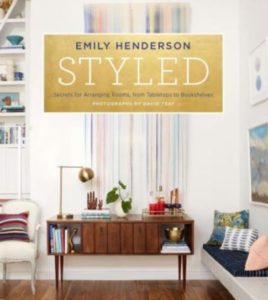
This book isn’t as much about starting to build your decor from ground zero as it is about how to style and work with what you already own. In the beginning of the book, Emily includes a quiz on how to identify your personal style and taste, shopping tips and then she launches into the huge difference tiny styling tweaks can make in your decor! She covers all basics like making sure your room has good flow, making sure that you aren’t over decorating part of a room and neglecting another part, and how to tell if your decor is competing with itself. She also throws in fun sections like how to style a sofa in 4 different ways based of your preferences. A lot of the styles featured are not quite my style- many of the photos featured feel very mid century modern/eclectic, but that didn’t stop me from getting a TON out of this book. What I also loved about this book it that unlike so many of the decor books out there that make you feel like you need to run out and buy new things, this book emphasizes on working with what you already have, and that is where true decorating skill is learned.
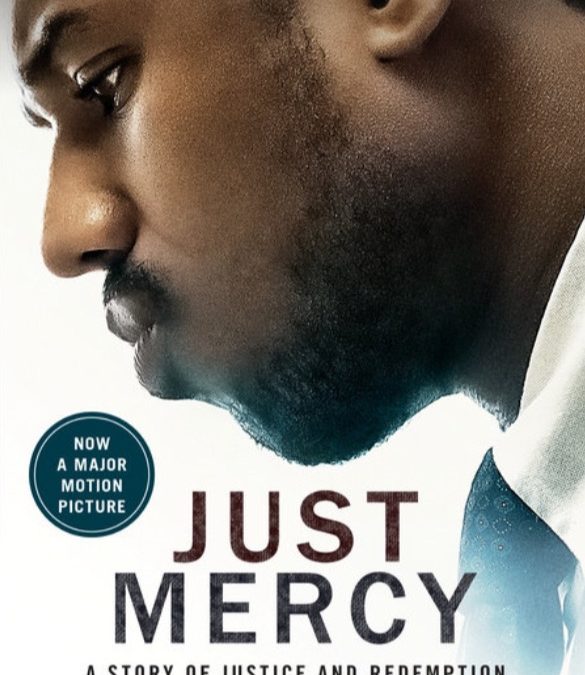
Show, don’t tell, is one of the rules of great writing. Don’t tell your audience that the plush blanket is soft, show them how the million little plush fibers kiss your skin as you pull the blanket close and warm around you. This is how I felt Brian Stevenson handled the telling of his professional life in his book, “Just Mercy.” I’m sure you’ve noticed that there is a lot of tension in our country right now. Things always heat up when a presidential election is less than 2 months away! Add to that that this year we are also dealing with the coronavirus, and heated race relations and it seems like gasoline is being dumped on every fire that usually lies simmering within this country. During the course of discussions being had over the current events in our country, someone recommended a book called, ”Just Mercy,” to me, and I checked it out from the library.
Wow. I’m not sure what exactly I expected; but this book surpassed my expectations. I think I expected a book that was either so agenda driven that there wasn’t much of a plot line, or one that went into so many statistics that I wouldn’t barely be able to focus, but that’s not at all what this book was. Instead this was a book with a compelling plot line spun throughout its pages that showed the flaws in our justice system, and that got its point across in a fair, example driven manner.
Bryan Stevenson, the author, has spent his life as an attorney representing the underprivileged wrongly convicted of high level crimes. At the beginning of his career he focused just on cases of individuals who he believed were wrongly sentenced to death row. There are truly frightening examples given in this book of how the facts have been manipulated against certain individuals, and how many have paid the ultimate price for someone else’s agenda.
I found this book very eye opening, the issues of our justice system are not ones that I have done very much research on, and while I plan to do more learning on this topic, I thought this book was a good intro. However, a lot of the examples given in this book are from the 1980s and 1990s. A lot has changed in our country since then. Some things have not. If you are looking to get a perfect snapshot of what the justice system looks like today then I’m not sure this book will give you the best picture. If, though, you are looking to see where we have been as a country, how far we have come, and where we still have to go, then I think you will really appreciate this book. Regardless of your motive for picking up this book you will find it well worth your time.
I do want to warn you that while this book is very well written with a compelling true story line woven through it, it deals with very heavy topics. There are disturbing and very sad stories, all true, that you will read in this book. Be forewarned that this is not a light and fun book to read, although there is hope and optimism woven in as well. Prepare yourself- and dive in!
Quick reminder that this post contains affiliate links; that means if you click on the link I will make a small commission at no extra cost to you- it’s a way to support my blog! I will only ever share an affiliate link if I love the product and think that you just might love it too!
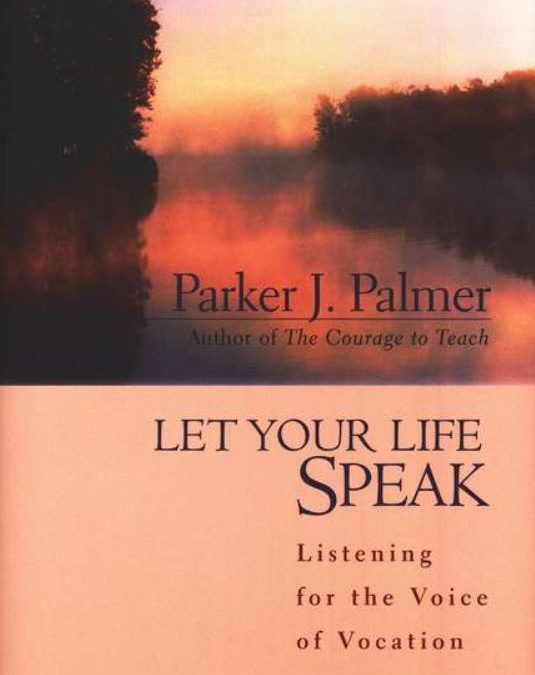
Parker J Palmer, Author of Let Your LIfe Speak, had been on the fast track for success. He had graduated at the top of his class, went to a good college and was on track for a tenured position at Georgetown University when he suddenly realized- he didn’t really want to do that. He started changing careers, first one thing then another, none of them lasting that long or feeling like the right thing for him. He then started feeling like a failure; he had graduated college with the brightest of futures in front of him and now here he was living a very ordinary life and not making much progress towards anything since he didn’t know what he wanted.
Eventually he finds himself led to a Quaker retreat home, a place to seek God’s will and try to hear His voice. During his time there he is offered a job as president of a college. He is ready to take the job but he decided to discuss this offer with a group of Quakers that he has grown close to. One of his friends asks him what he would like about the job. Parker starts listing the things he wouldn’t like- having to speak on behalf of the college to the media, all the obligatory events he would have to go to, etc. His friend gently breaks in and reminds Parker that he was supposed to be listing the things he would like about the job. Parker then has to admit, both to himself and his friends, that in fact, the thing he likes most about the job is the title and the paycheck. It then becomes clear that this is not what Parker should do.
This moment serves as a pivotal point in which Parker realizes he needs to consider what is most important to him in a job. He realizes that he needs to look at what he’s always liked to do, and how he can utilize that in a career. He thought he wanted to teach because he loves books, learning and sharing information. What he ends up realizing is that through writing and activism he can use those same gifts and abilities.
Parker then looks back over his life and realizes that there were small arrows from the time he was a small boy on pointing him in this direction. He focused on where he could easily apply his gifts to make a good living. In the end however this left him feeling empty and purposeless. He then had to go back and look for all the little clues from his life. He had to let his life speak about finding his vocation.
There are many ways to use our gifts. So often we focus on either the way in which our gifts could be used most lucratively, or the most common way in which people with our gifts typically use them- even if there is another field in which our gifts can be used that we are more passionate about. We worry that taking the way less traveled will lead to failure. I think it is worth pointing out that people are generally most successful when they focus their life work on areas that they are passionate about. I believe we let the fear of it being hard to make a living at a specific vocation scare us away from trying it. But what is going to be harder- spending your days going to a job that you don’t like and have to force yourself to go to each day; or making a living from an area where it can be challenging, but in which you are so passionate that you wake up each day excited to get to work? And let us not forget that the top tier in any field can be financially successful. If you are truly passionate and driven in your chosen field I believe you will eventually succeed- although it may get very hard and take longer than you wish. Avoiding one’s greatest passions will never lead to a fulfilled life. It is rather the dedication day after day in an area in which we are truly passionate that will lead us to the most fulfilled life, and allow us to make the impact that we were put on this earth to make.
I challenge you to look at your life, what are the clues pointing you to a certain path? In what ways has your life “spoken” to you? What have you always loved? How did you spend your free time as a child? When you are free of obligations what do you find yourself doing or wanting to do? We have one life on this earth and in the words of Mary Oliver, “Tell me, what is it you plan to do with your one wild and precious life?” Listen and let your life speak to you.
Quick reminder that this post contains affiliate links; that means if you click on the link I will make a small commission at no extra cost to you- it’s a way to support my blog! I will only ever share an affiliate link if I love the product and think that you just might love it too!
Summer is basically over- I am fighting the urge to cry about this fact. My first reaction is always to bemoan how quickly the summer has gone- but fall is lovely too! There is still a lot to enjoy outdoors before the weather changes. And there will be cool mornings and crisp evenings to enjoy both outside and inside. Regardless of where you will be enjoying this transition time here are 3 cozy mystery series to transition you from summer to fall.
Lighthouse Library Mystery Series by Eva Gates
Maybe start this series while it is still summer! This series is set in a fictional town in the outer banks, in an old light house that has been converted into a library. Lucy is enjoying her brand new dream job at the LightHouse Library, just getting familiar with the job and the townspeople. It is an exciting time as the library will be hosting a traveling exhibit of first edition Jane Austen books. Things go from great to terrible however when someone ends up dead during the party. The situation only gets worse as one by one books front the traveling exhibit start to disappear. This catapults Lucy’s job position from one of security to a very tenuous nature indeed.
I loved the small town feel embodied in this book, the discussion of Jane Austen’s work and the coastal setting.
Emily was just your average English professor at a small college when her great aunt dies and she suddenly finds herself the heiress of a large estate- but there are some suspicious things surrounding her aunt’s death… Emily tries to ignore all these things that seem not quite right but when there is another death Emily can no longer ignore her intuition that all is not as it seems.
I also enjoyed that there are a lot of references to Jane Austen and her works in this book- the English professor side of Emily peaks out throughout the books pages. If it’s been a while since you’ve picked up one of the classics you may find yourself inspired to do so after reading one of the books in this series!
Placed in a quaint, coastal Oregon town, and taking place on an estate known as windy hill there are a lot of references to the stormy ocean that makes you want to simultaneously take a walk along the beach and curl up in a cozy chair.
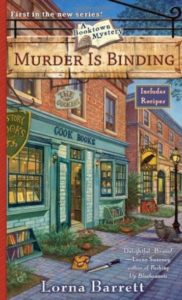
The quaint setting of this series pulled me in right away. Set in New Hampshire, book town is a tourist attraction where all the shops are specially store dedicated to one specific genre. The main character, Trisha Miles, owns and operates a mystery book store that further specializes in vintage mysteries. Alas, it seems that all of Trisha’s years as a mystery enthusiast were preparing her for all the sleuthing she will have to do as mystery after mystery shows up on her front door, earning her the title of village jinks.
I love the settings of these books. There’s something about a town built around books, about the day to day life as a small business owner, and the quirky personalities of the characters that just draws the reader in. Current mysteries, classic mysteries, if you are a mystery lover that is in need of some additional titles to pick up then you will find your list of to be read titles refreshed after reading this! While I would not classify this series as a great work of fiction there is something cozy and comforting about this series- like having a chai latte on the first cool day of fall! And there are lots of mysteries sprinkled throughout the book that will have you pulling out your mixing bowls and baking something delicious to munch on as you read.
If you are looking for the next great American Novel, you’ll be disappointed in these books. However if you are looking for a book that keeps your attention and provides distraction from everyday life, then you’ll enjoy these. They are light, easy, fun reads! Each of these books will help to develop your interest in the classics and it will have you wanting to either pull out one of your favorite classics or pick up one of the classics that you have been meaning to read for years. Maybe you’ll even be motivated to pick up that one that you were supposed to read in high school but that you only read the notes on in order to pass the test. 😉 If you are looking for something light and enjoyable, fairly clean of offensive language, violence and explicit sex scenes, then take a look at the three cozy mystery series I have enjoyed, and that you just might too!
Quick reminder that this post contains affiliate links; that means if you click on the link I will make a small commission at no extra cost to you- it’s a way to support my blog! I will only ever share an affiliate link if I love the product and think that you just might love it too!
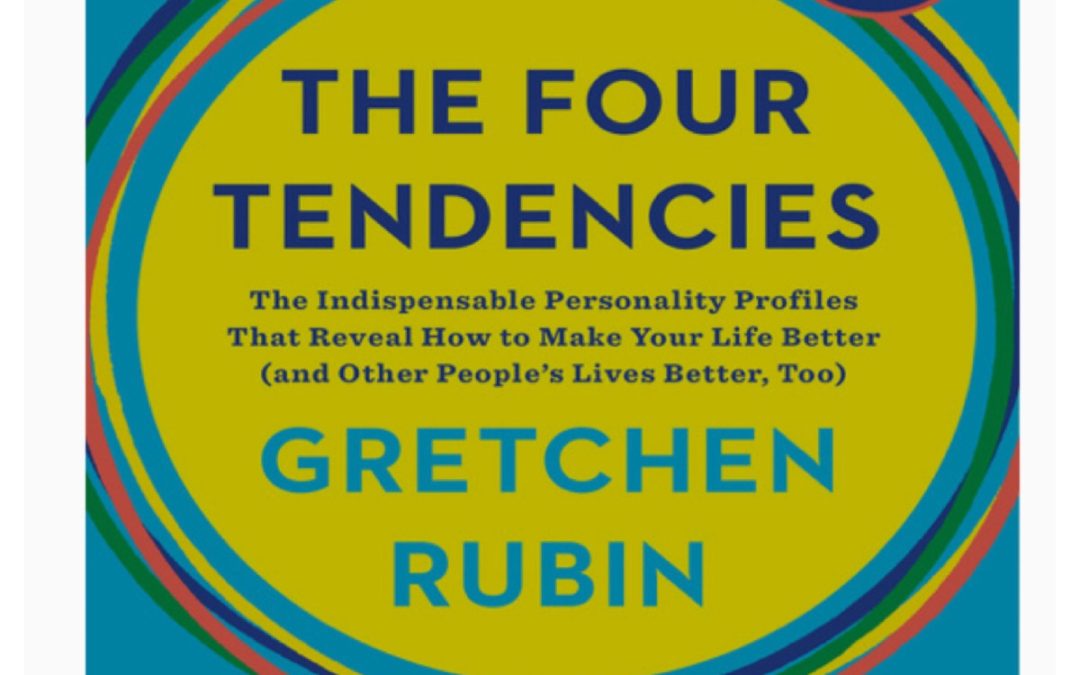
I had been looking forward to reading Gretchen Rubin’s book, The Four Tendencies, for a while now and it did not disappoint! This book cIassifies four basic personality types and offers insights into each one ranging from how to better understand family members, to tips on how to get your coworkers to clean up their dishes in the break room!
Ms Rubin’s premise for The Four Tendencies, is that there are 4 basic personality types; the Upholder, the Obliger, the Questioner, and the Rebel, which she has identified through studies conducted via her website. While everyone has a unique mix of all of these tendencies, everyone has one tendency that is dominant. This categorization of personality types is helpful because 1) It is fairly easy to identify each type, and 2) the Four Tendencies assessment is very reaction driven. While every personal assessment tool is helpful to better understand ourselves and in working with others, the Four Tendencies offers tactical tools on both how to understand our reactions, and the reactions of others. Knowing how we are predisposed to react in a given situation and why is key to then being able to manipulate the situation in order to drive the best results. The same is true with others; when we know going into a situation that an approach will most likely be perceived we can then alter our approach accordingly.
The Upholder
The first tendency is the Upholder. Upholders are the people who have very little problem setting and keeping New Year’s resolutions. When they say they want to start running in the mornings, or meditating before bed they generally follow through with it. Nothing gets an Upholder more excited than a brand new planner! They thrive on having a schedule and sticking to it. In a work situation Upholders are the ones that you know you can trust to get something done when you tell them to do it. They tend to unquestioningly obey rules that are placed before them. They can tend to be a little rigid and uptight and don’t like to have plans change on them at the last minute. Upholders also tend to have a strong sense of self preservation, they can sense when they are approaching burnout and will usually combat against it. Similarly while they may want to make others happy and be accommodating they have no problem saying no when they are at their limit. Upholders have the advantage of being able to keep habits and routines for their lives but they do have to work to remember that it is ok to allow for flexibility in their schedules to work around others and this does not mean that their lives are falling apart!
The Obliger
The second tendency Ms Rubin identifies is the Obliger. Obligers are the ones we know we can count on, though they can’t necessarily count on themselves. They are the people who are all about keeping others happy; they can be counted on to just about always be obliging to others. But that’s the key, they need external accountability. Obligers have a very hard time keeping to a new habit or resolution simply because they have said that they will. Most obligers have given up ever making New Year’s resolutions because they know they will not keep them. Rather they need to confide in someone who will follow up and see if they are sticking with their new resolution. Obligers thrive when they have someone else counting on them. The trick for obligers is to make sure they have external accountability built into their everyday lives. A large percent of the population are obligers.
The Questioner
The third tendency is the Questioner. The questioner is the one who needs to know why. Why is that new rule needed? Why shouldn’t we eat donuts for breakfast every morning? Are donuts even that bad for us? For the questioner is not a matter of rule or no rule, it is a question of whether they find that rule arbitrary or not. If they can be convinced by a reason, that is valid to them, that something is worth doing, then they will. If not, then they won’t. While questioners can generally keep a resolution or habit if they set their mind to it, they find a date such as January first arbitrary. When dealing with a Questioner don’t waste your breath telling them that they should do something, rather explain the research behind why they may want to and allow them time to do some of their own research. Questioners do have to come to grips with the fact though that there is always more research that can be done and eventually it is time to take action- preferably before they drive their friends and family crazy! A large percentage of the population are also questioners.
The Rebel
The last tendency is the Rebel. While this is the smallest percentage of the population I’ll guarantee that you know at least one rebel- they are hard to miss! Rebels hate to be told what to do, even if it’s something that they want to do or work on in themselves, when they start telling themselves that they should or must do something all over. Rebels will generally never make a New Years resolution, because saying that they have to do something will make them rebel! Instead rebels need to tell themselves that they can do whatever they want. That is how others can best work with rebels. By explaining how and why they need a rebel to do something, but ultimately leaving it up to them as to how, when, or even if they want to do it. The more you can make the rebel think something is their idea, and leave it up to them the better the results for everyone!
Still confused about which one you are? The Four Tendencies also includes a questionnaire so you no longer have to wonder. This is one of those rare books that is not only fun and engaging to read, but one from which you will surely glean at least one,(if not many), nuggets to take away and start implanting right away! Get your own copy of the Four Tendencies here:
As an Amazon Associate I earn from qualifying purchases. See below that this link is purely for convenience and even though there is not additional cost to you when you purchase your copy of this book, it will support the work and care put into this site. Thank you very much for your support!